
Painting guide · 6 min read
Painting in a Massachusetts winter: what still works
The exterior season closes long before the calendar says winter. The interior season does not. Here is what the temperature actually governs, and what we can still finish between December and March.
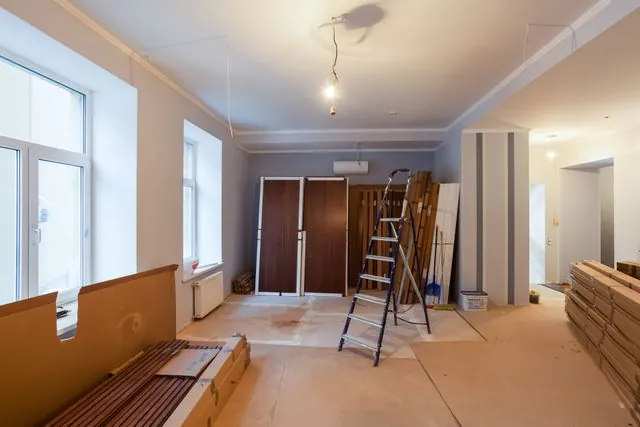
Every November the same question arrives: is it too late to paint? For the outside of a house in Massachusetts, usually yes. For the inside, almost never. The two seasons are governed by different things, and confusing them is how people end up waiting four months for work that could have been done in January.
What temperature actually governs
Paint does not care about the air temperature on the weather app. It cares about the temperature of the surface it is landing on, and about how quickly the solvent or water is leaving the film.
For most exterior products that means the substrate needs to stay above roughly 50°F through the drying window, not just at the moment of application. Siding in shade, masonry, and anything with a north exposure holds the cold long after the air has warmed. A sunny 55°F afternoon in March is not the same job as a sunny 55°F afternoon in May.
Indoors the equation is different. The surface is already at room temperature, and what matters is airflow, humidity and how many coats are going on in one day.
What we can paint inside between December and March
Interior walls, ceilings, trim, doors and stairwork are all normal winter work. So is cabinet refinishing, because the doors and drawers are sprayed in a controlled space rather than in the kitchen itself.
Doors that need to come off their hinges are the one item that benefits from planning. They are easier to spray flat, and a garage or workshop that stays above freezing gives a better finish than a dining room table covered in newspaper.
What we avoid is anything that needs the windows open for hours at a time in a house that is occupied. That is a scheduling decision, not a quality one.
Ventilation and dry times in a closed house
A house that has been shut since October has less air movement than the same house in June, and paint responds to that. Water-based products flash off more slowly in a humid room, and oil-based products need more fresh air than people expect.
In practice we run fans, keep interior doors open where we can, and add a little heat rather than a lot. Overheating a room to speed up drying is a common mistake: it skins the surface while the film underneath is still soft, which is how brush marks and blocking show up weeks later.
We also tell you which rooms to keep out of and for how long, rather than taping off a door and hoping.
Why winter is often the easier booking
From April to October the schedule fills with exteriors, and interior work gets fitted around weather. Between December and March the opposite is true. A whole-house interior repaint that would take three weeks to get into in June can often start within days in January.
The work itself is the same. The difference is that a winter interior is not competing with a spring exterior for the same crew, and the house is already closed up, so there is less to move and less dust coming in from outside.
What has to wait for spring
Exterior siding, trim, decks, porches, masonry and anything that lives outside wait. Not because we cannot hold a brush in the cold, but because the coating will not cure properly and the failure shows up a year later as peeling or blistering that looks like a preparation problem.
The exception is small, protected work on a mild day, and even then it is a judgement call on the specific surface. If you are unsure, send a photo and we will tell you honestly whether it can be done now or should wait.