
Painting guide · 7 min read
How to choose a painter, and what to ask before you hire
Most bad paint jobs are decided before the first brush is opened — at the estimate. These are the questions that separate a contractor from a van.
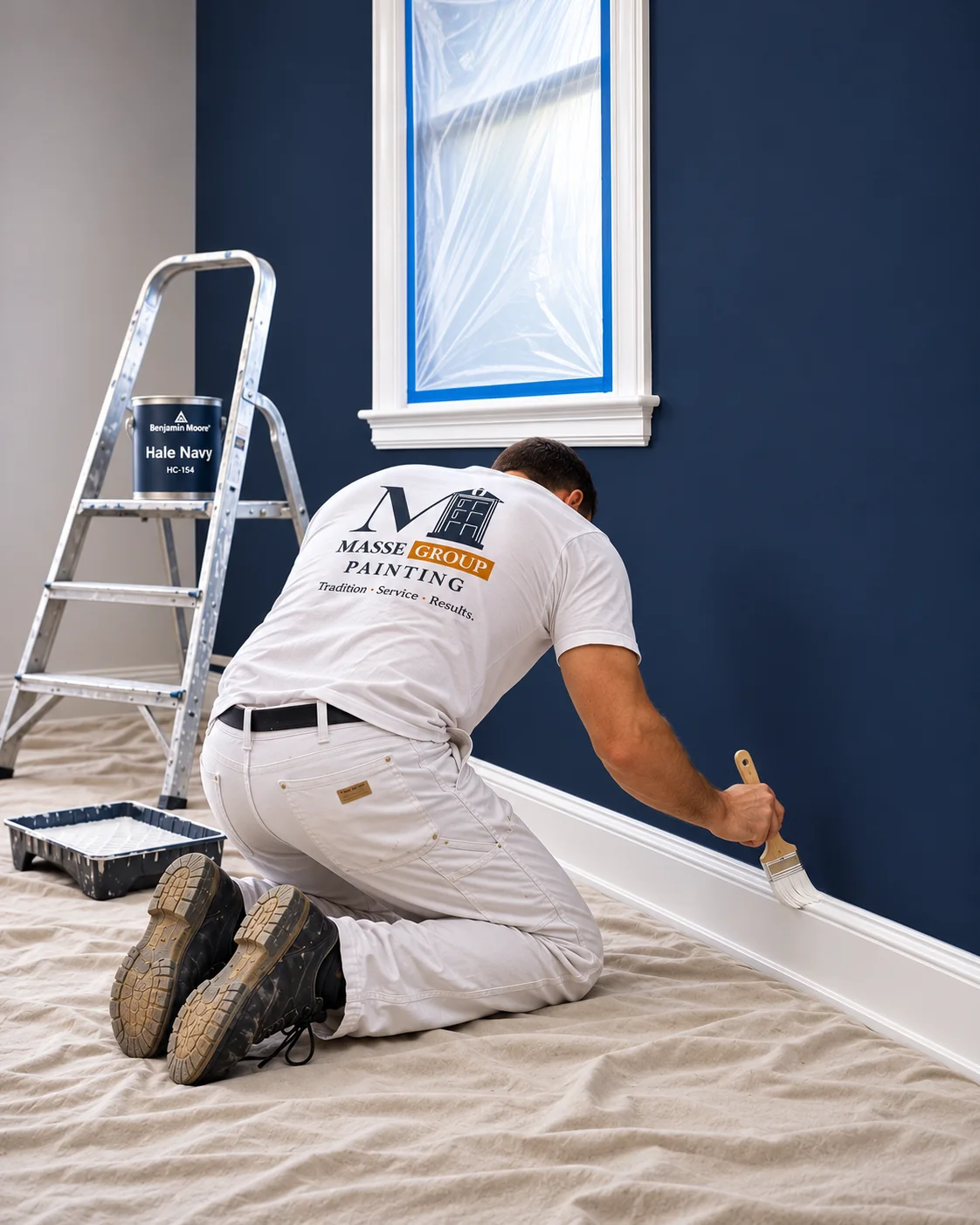
Price is the easiest thing to compare and the least useful. Two quotes that differ by thousands are usually describing two different jobs, not two different margins.
Here is what actually matters, and what to ask before you sign anything.
The four things that actually matter
Insurance. Ask for a certificate of insurance and check the dates. A contractor without liability coverage is a risk you are carrying, not a bargain.
Preparation. Ask what will be scraped, sanded, patched, caulked and primed. If the answer is vague, the price is vague too.
A written scope. Rooms, surfaces, coats, products and exclusions, in writing. A verbal estimate is not an estimate.
Who does the work. The crew that shows up matters more than the logo on the quote. Ask whether the company uses its own painters or subcontractors.
Insurance and registration in Massachusetts
Massachusetts does not issue a painter's licence. What a legitimate residential contractor should have is home improvement contractor registration and liability insurance, and you should be able to see evidence of both.
Ask for the certificate of insurance directly, not a promise that it exists. A company that has been trading for decades and carries its own crews will have it to hand.
How to read an estimate
A useful estimate names the rooms and surfaces, states the number of coats and the products, and describes the preparation. It says whether ceilings, trim, doors and closets are included, and it lists what is not included.
It also gives a schedule and a start window. If the document is a single line with a total at the bottom, you have a price, not a scope.
Red flags worth taking seriously
A quote far below the others, with no explanation of what is excluded. No written scope. No insurance certificate. A request to pay a large share of the job before any work starts. No business address, or a phone number that only goes to voicemail.
None of these is proof of fraud. Together they are a pattern, and the pattern usually predicts how the job will go when something needs fixing.
What a good handover looks like
A finished job should come with a walkthrough, a chance to list anything that needs touching up, and a clear explanation of what was done and what to expect from the finish.
Paint needs time to cure, and some sheens show marks more than others. A contractor who explains that at handover is a contractor who expects to be judged on the result, not just the invoice.