
Painting guide · 7 min read
What interior painting costs on the South Shore
A per-room price is the least useful number in painting. Here is what actually moves the cost of an interior job, and what a written estimate should show you.
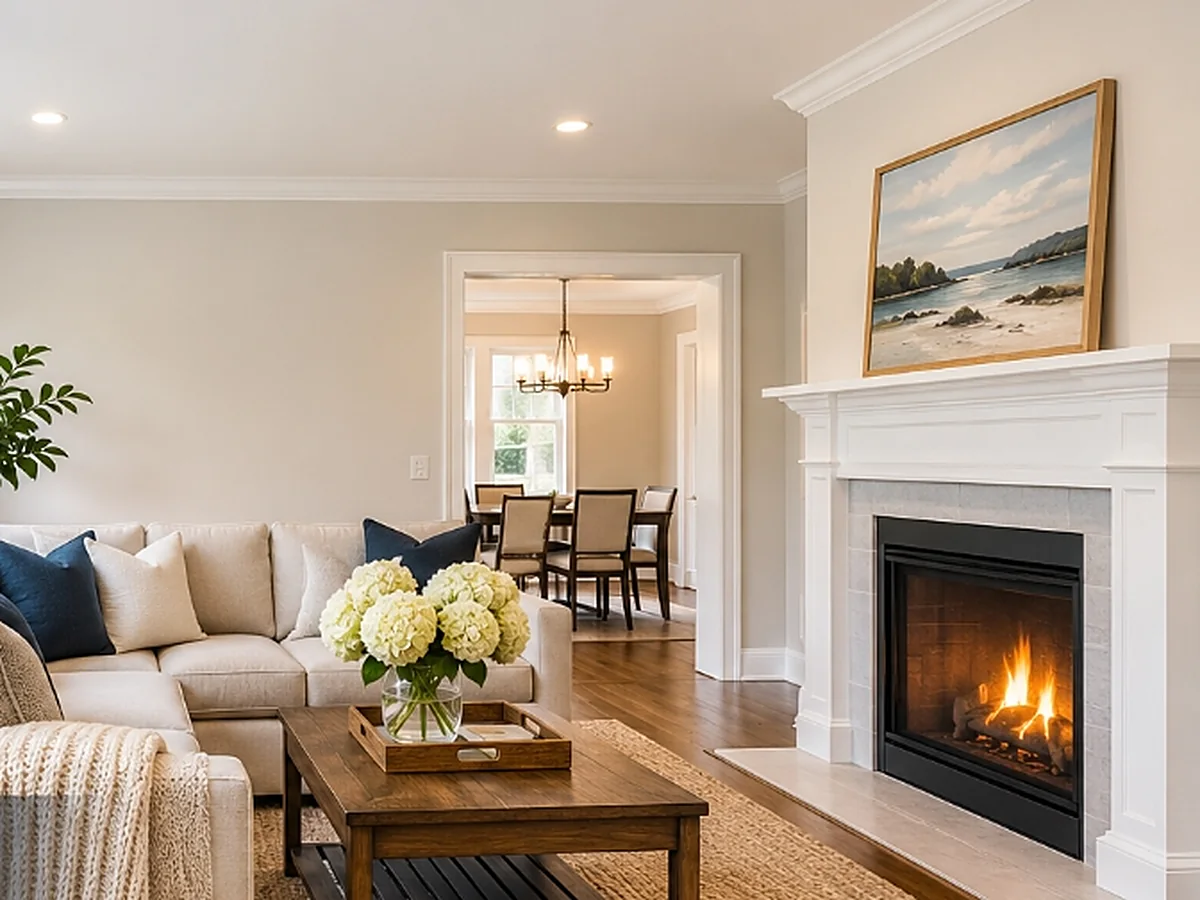
Homeowners usually start with the same question: what will it cost to paint my house? The honest answer is that no responsible painter can give you a real number over the phone, because the price is set by the condition of the surfaces and the scope of the work, not by the square footage of the rooms.
What follows is the part most quotes do not explain — where the money actually goes, and how to tell whether two estimates are describing the same job.
Why a price per room misleads
Two bedrooms of identical size can differ by thousands of dollars. One has smooth walls, eight-foot ceilings, standard trim and a colour close to what is already there. The other has plaster with hairline cracks, ten-foot ceilings, crown moulding, three windows with muntins, a dark wall going to white, and furniture that has to be moved twice.
The paint itself is a small part of the cost. Labour and preparation are the cost. Any quote that does not describe the preparation is not really a quote — it is a guess with a number attached.
The things that actually move the number
Surface condition. Patching, sanding, caulking and priming are the difference between a finish that looks right and one that shows every imperfection. Plaster repairs, water stains and failed joint compound all add time.
Trim and detail. Baseboards, crown, casing, chair rail and window muntins are slow work. A room with a lot of trim can take longer than a larger room without it.
Height and access. Ten-foot ceilings, stairwells and two-storey foyers need staging or ladders, and that is real time.
Colour changes. Going from a deep colour to white, or the reverse, usually needs an extra coat. So does a strong red or navy.
Wallpaper and wall coverings. Removal, adhesive washing and making good the wall underneath is a separate job from painting, and it is often the most unpredictable part of a renovation.
Occupancy. An empty house is faster. A furnished, lived-in house needs daily protection, careful sequencing and a route through the rooms.
What is included. Are ceilings included? Closets? The inside of the windows? Doors taken off and sprayed, or brushed in place? Two coats or three? These are the questions that explain most of the gap between a low quote and a high one.
What a written estimate should itemise
A useful estimate names the rooms and the surfaces in each one, states how many coats go where, and describes the preparation: what will be patched, what will be sanded, what will be primed. It should say whether the price includes ceilings, trim, doors and closets, and whether furniture moving and floor protection are part of the job.
It should also say what is not included. At Masse Group we list exclusions rather than let you discover them mid-project — major plaster reconstruction, structural carpentry and lead abatement are the common ones.
Finally, it should tell you who is doing the work. A crew of subcontractors who have never met you is a different proposition from a company that has been in the same family for four generations and carries its own insurance.
How to compare three quotes without being fooled
The lowest number is not the lowest cost if it excludes the prep, the ceilings or the second coat. Put the three estimates side by side and compare the scope line by line, not the total.
Ask each contractor the same four questions. What exactly is being painted? How many coats, and of what product? What preparation is included? Who will be in the house, and for how many days?
If one quote is dramatically lower, one of three things is true: the scope is smaller, the preparation is being skipped, or the contractor is not insured and does not intend to be around if something goes wrong. None of those is a bargain.
Why we quote after a walkthrough
We look at the house because the house tells us what the job is. Colour changes, plaster condition, trim profiles, access and occupancy are all visible in twenty minutes and invisible on a form.
The walkthrough takes about forty-five minutes, it is free, and you get a written proposal within 24 hours. If the scope is straightforward we can sometimes give a realistic range before we arrive, but we will not pretend that a number invented over the phone is an estimate.