
Painting guide · 6 min read
Cabinet refinishing, refacing or replacement?
Three different jobs, three different prices, and a lot of confusion about which one a kitchen actually needs. Here is the honest comparison.
Cabinet work is the highest-value painting in a house and the least forgiving. The right choice depends less on budget than on the condition of the boxes, the doors and the layout.
This is how the three options differ, and how to tell which one is honest for your kitchen.
Three different jobs
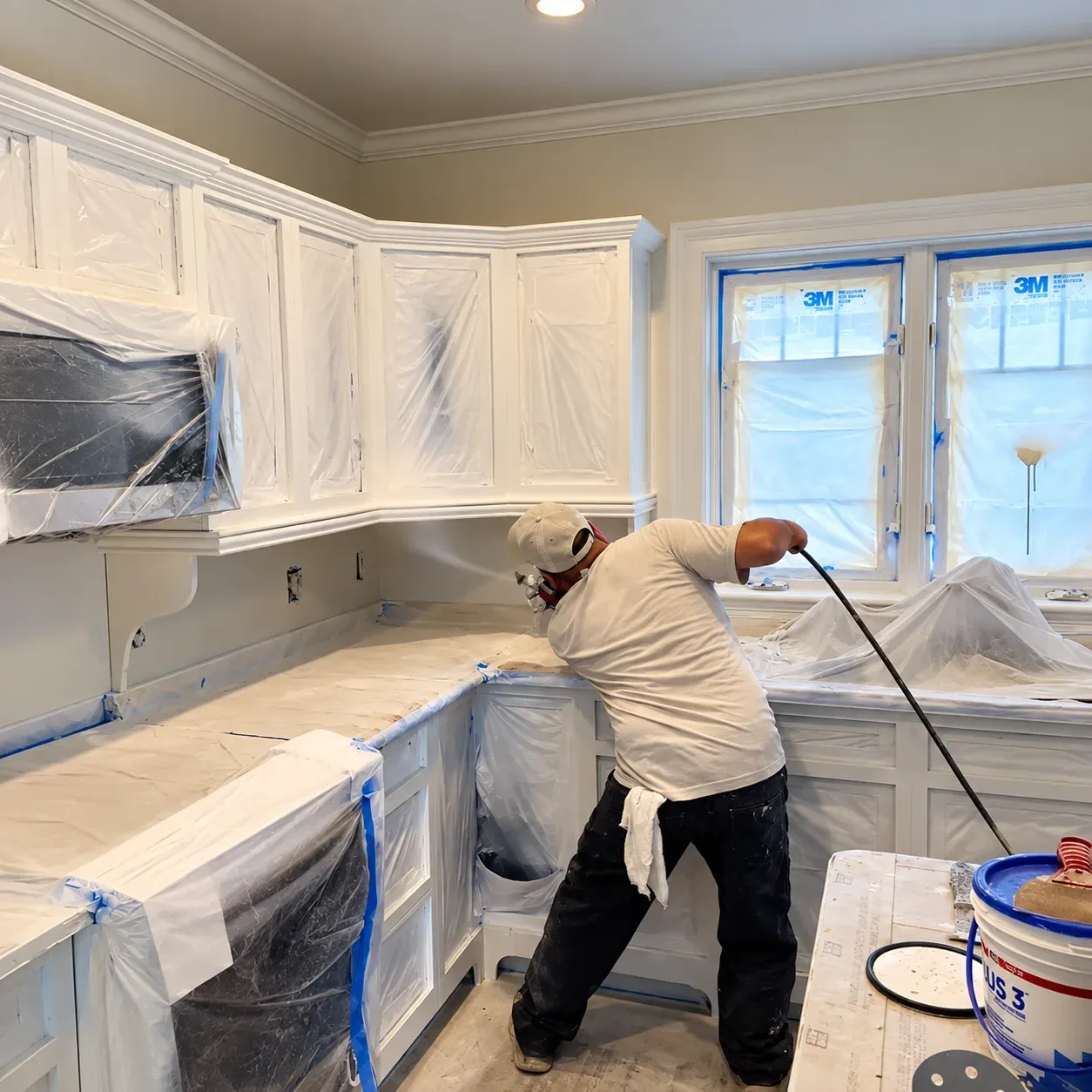
Refinishing keeps the existing cabinets and changes the finish. Doors and drawers come off, get degreased, sanded, primed and sprayed, and the boxes are masked and finished in place.
Refacing keeps the boxes but replaces the door and drawer fronts and applies a new veneer to the visible box faces. It changes the look more than refinishing and costs more.
Replacement removes the cabinets entirely. It is the right answer when the boxes are failing, the layout does not work, or you are changing the kitchen anyway.
What refinishing can and cannot fix
Refinishing fixes colour, sheen and surface wear. It turns an orange-oak kitchen into a painted one, covers years of grease and yellowing, and gives a smooth, wipeable finish that brushes clean.
It does not fix a warped door, a broken hinge, a water-swollen box or a layout that puts the sink in the wrong place. It also will not hide deep grain if the doors are oak and you want a glass-smooth finish, unless the grain is filled first.
We assess all of that before quoting, and we will tell you when refinishing is the wrong answer.
What refacing actually changes
Refacing is a legitimate middle option, particularly when the doors are damaged but the boxes are sound. The visible surfaces are replaced, so you get new door profiles and a new colour without demolition.
What it does not change is the inside of the cabinets, the layout or the boxes. If the interior is failing, refacing is a new face on an old problem.
When replacement is the honest answer
Replacement makes sense when the boxes are soft or out of square, when the layout is genuinely wrong, or when the kitchen is being reconfigured for plumbing or appliances.
It is also the answer when the cabinet interiors are failing, because no finish on the outside fixes shelves that are sagging or boxes that have taken water.
How the work is actually done
Doors and drawers are removed and labelled, then degreased, sanded and primed. They are sprayed flat, which is why the finish looks factory-applied rather than brushed.
The boxes are masked, cleaned and finished in place. The kitchen is unusable for the spraying days, and the doors need a cure window before they go back on. Most kitchens take several working days, and the proposal gives you a realistic sequence rather than a best case.